
The Science of Fast Charging: What Really Determines Charging Speed?
Wattage is only part of the story. Real charging performance depends on protocols, voltage negotiation, and dynamic power control.
⚡ 1. Power ≠ Speed: Understanding the Basics
Charging power is calculated using a simple formula:
Power (W) = Voltage (V) × Current (A)
For example:
- 5V × 2A = 10W (standard charging)
- 28V × 5A = 140W (ultra-fast charging, PD 3.1)
However, your device does not simply “take” 140W. It negotiates with the charger to decide how much power it can safely receive.
🔌 2. What Charging Protocols Actually Do
Charging protocols define how this negotiation happens. Without a shared protocol, devices fall back to basic 5V charging — even if the charger supports 140W.
USB Power Delivery (PD)
PD works through a handshake process between the charger and device. They dynamically agree on voltage levels such as:
- 5V / 9V / 12V / 15V / 20V / 28V
With the introduction of PD 3.1 (EPR), charging can now reach up to 140W and beyond.
This is widely used for high-performance laptops and next-generation devices.
PPS (Programmable Power Supply)
Unlike fixed voltage steps, PPS allows continuous adjustment:
- Voltage can change in small increments (e.g., 3.3V–21V)
- Current adjusts in real time
This reduces energy loss and heat, improving efficiency and battery lifespan.
📉 3. Charging Curves: Why Speed Slows Down
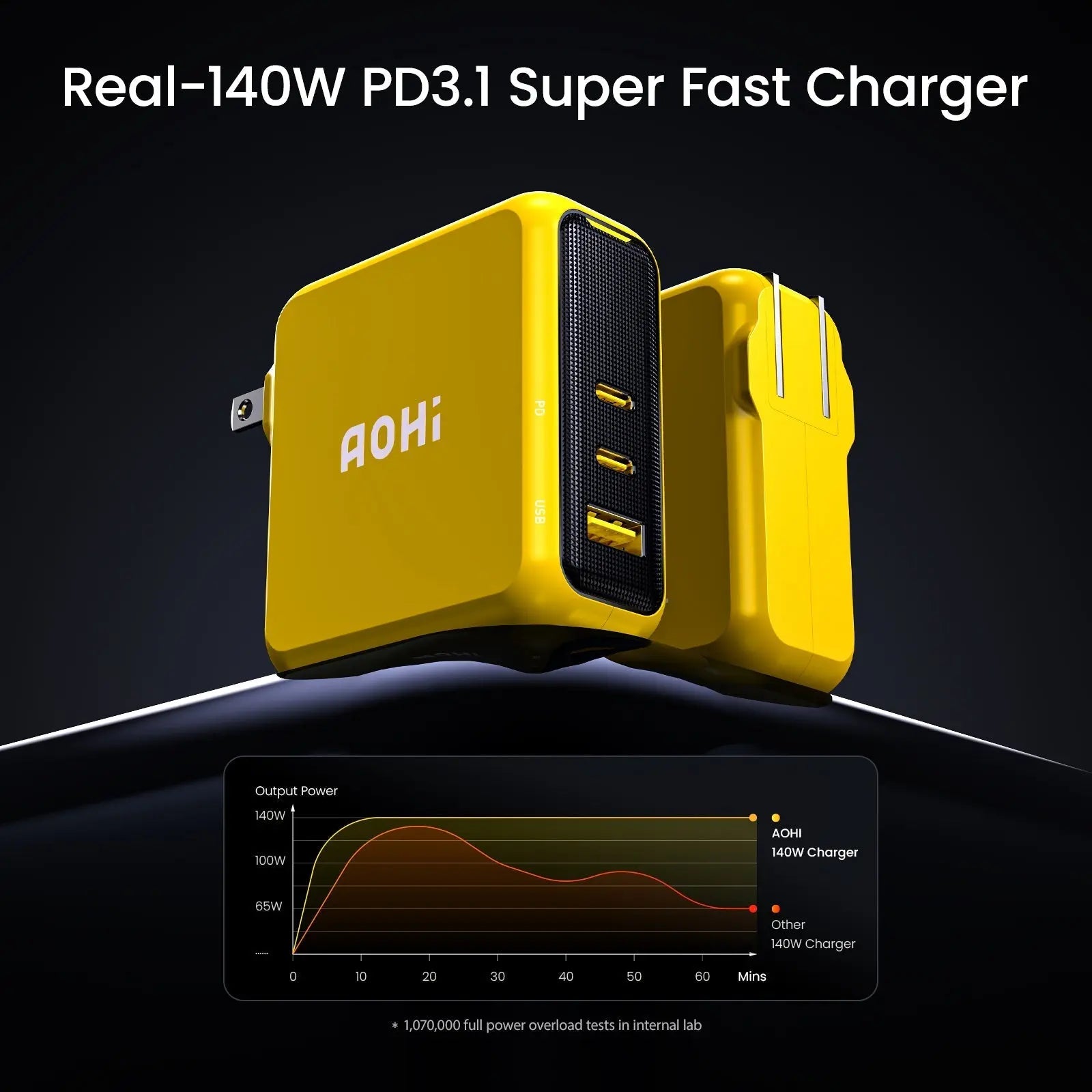
Even with a 140W charger, your device will not charge at full speed all the time.
- Stage 1 (0–50%): High power input (fastest)
- Stage 2 (50–80%): Gradual reduction
- Stage 3 (80–100%): Trickle charging for battery protection
This is why a device might reach 50% quickly but take much longer to reach 100%.
🌡 4. Heat: The Invisible Limiter
Heat is one of the biggest constraints in fast charging.
Higher power = more heat. If temperature rises too much:
- Charging speed is automatically reduced
- Battery degradation increases
Advanced chargers use:
- High-efficiency components (like GaN)
- Thermal management systems
To maintain stable output even at high wattage like 140W.
🔄 5. Multi-Port Charging: Why Output Changes
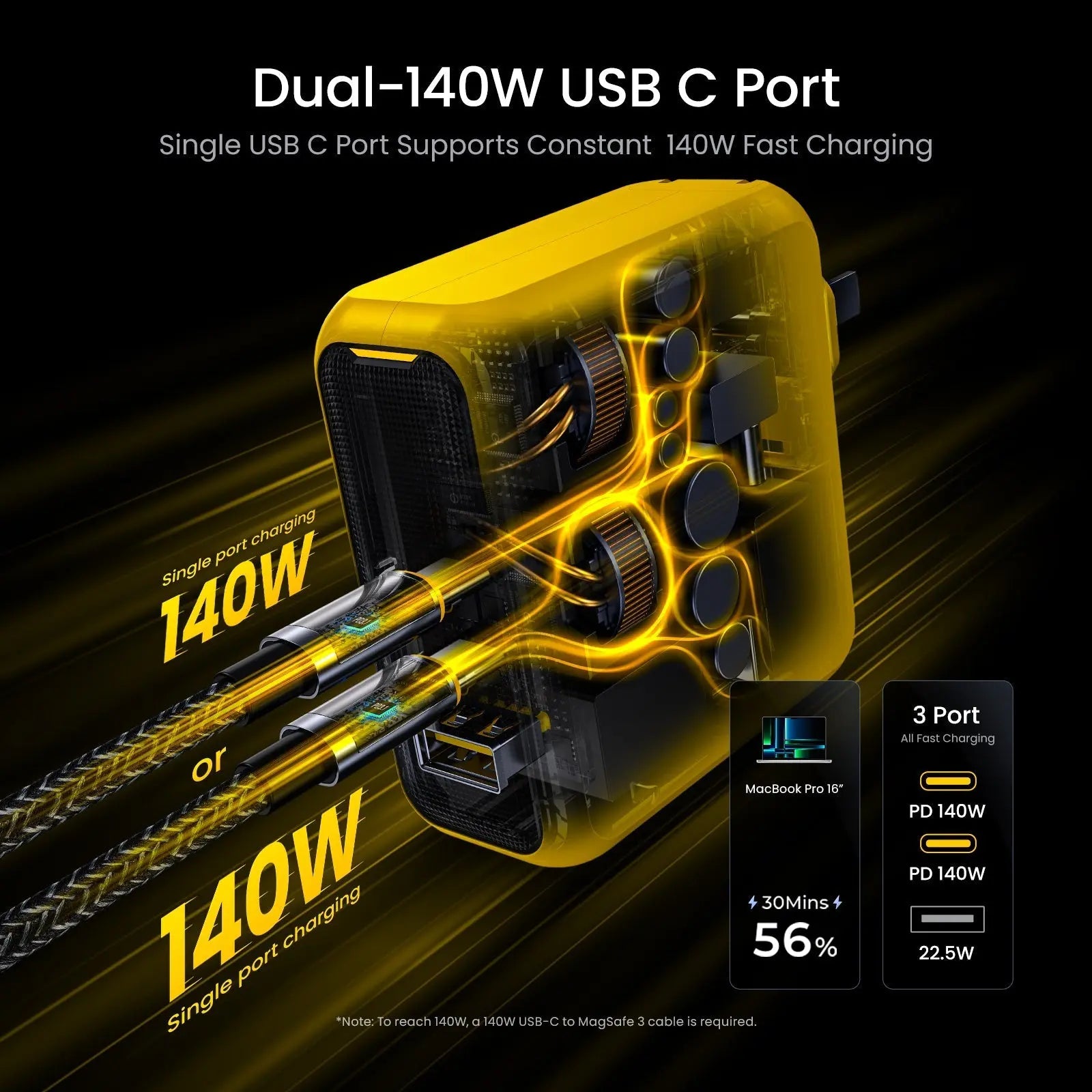
When multiple devices are connected, total power is shared.
- Single port: up to 140W
- Dual ports: dynamically split (e.g., 100W + 40W)
Smart chargers automatically allocate power based on device demand.
⚠️ 6. The Cable Matters More Than You Think
Even if your charger supports 140W, your cable must also support it.
- E-mark chip
- 5A current support
- PD 3.1 (EPR) compatibility
Without this, charging may fall back to 100W or even 60W.
🧠 7. Real-World Charging = System Performance
Final charging speed depends on:
- Charger protocol support
- Device compatibility
- Cable capability
- Thermal conditions
It’s not about one number — it’s about the entire ecosystem working together.
Smarter Charging Starts Here
Understanding charging technology helps you choose better — and charge faster, safer, and more efficiently.
Explore GaN Charger