
Understanding Charging Protocols: Why Your Charger Matters More Than You Think
Not all chargers deliver the same performance — and the difference comes down to charging protocols.
⚡ What Is a Charging Protocol?
A charging protocol is essentially the “language” that your charger and device use to communicate. It determines how much power is delivered, how fast your device charges, and how safely that power is managed.
Without the right protocol, even a high-power charger may fall back to slower speeds.
🔌 The Most Common Fast Charging Protocols
1. Power Delivery (PD)
USB Power Delivery (PD) is the most widely used fast-charging standard today. It supports a wide range of power levels — from 18W all the way up to 140W and beyond.
PD is commonly used for:
- MacBook and other laptops
- iPad and tablets
- Modern smartphones
2. PPS (Programmable Power Supply)
PPS is an advanced extension of PD that allows real-time voltage and current adjustments. This results in more efficient charging, less heat, and better battery health.
It’s especially important for newer Android devices like Samsung Galaxy series.
3. Other Protocols
Some brands use proprietary protocols, but most modern devices are moving toward universal standards like PD and PPS.
⚠️ Why Protocol Compatibility Matters
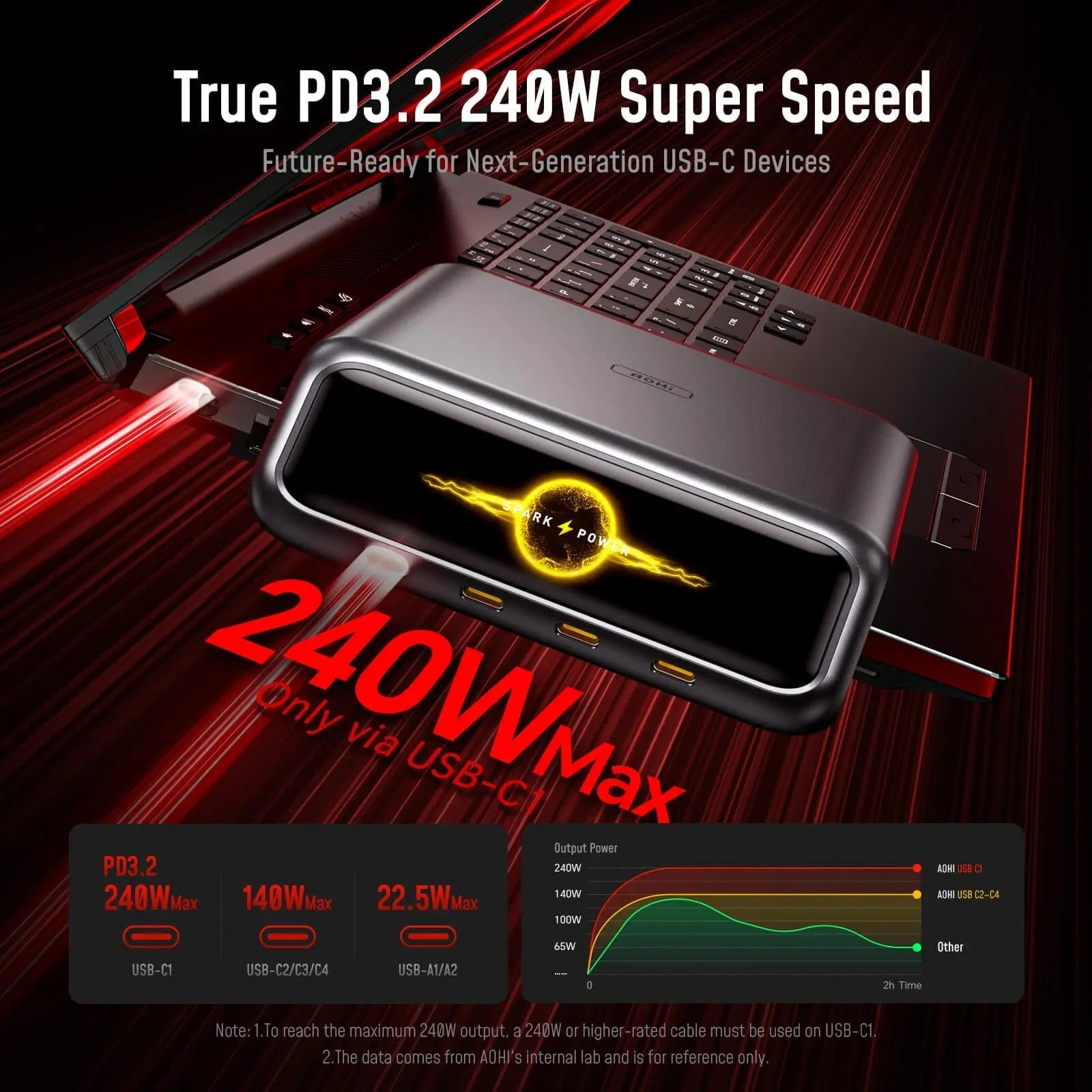
Even if a charger says “140W,” it doesn’t mean your device will actually charge at 140W.
Charging speed depends on:
- Protocol support (PD, PPS, etc.)
- Cable capability
- Device limitations
If any part of the system doesn’t match, charging speed drops.
🚀 Smart Power Allocation: The Next Step
Modern chargers now go beyond just supporting protocols — they intelligently distribute power across multiple ports.
This means you can charge:
- A laptop and a phone simultaneously
- Two high-power devices at once
Without manually adjusting anything.
🧠 Efficiency & Safety Go Hand in Hand
Advanced charging technologies like GaN (Gallium Nitride) allow chargers to deliver higher power in smaller sizes while reducing heat.
Combined with multi-layer protection systems, modern chargers ensure:
- Stable output
- Temperature control
- Device safety
💡 So, What Should You Look For?
When choosing a charger, focus on:
- Support for PD and PPS
- High power output (100W–140W+ for laptops)
- Multiple ports with smart distribution
- Compact design for portability
Upgrade Your Charging Experience
The right charger doesn’t just power your devices — it optimizes how they charge.
Explore Fast Charger